What this is
Engineering documentation for a five-key family of wooden hulusi, the Chinese cucurbit free-reed flute. Each instrument is three independent stopped-pipe + free-reed systems sharing a hardwood gourd wind chest. The design is fully parametric: change one input in the workbook and every dimension across all five keys recomputes.
This page documents the design through the v4.1 scaffold — see the udu repo for the v4 reference and v4-audit.md for what changed.
Governing physics
Stopped pipe (each tube)
f = c / (4 · L_eff)
L_eff = L_acoustic + 0.6·r_bore. Open at the foot, closed at the reed end. End correction at the open end only.
Free reed (cantilever)
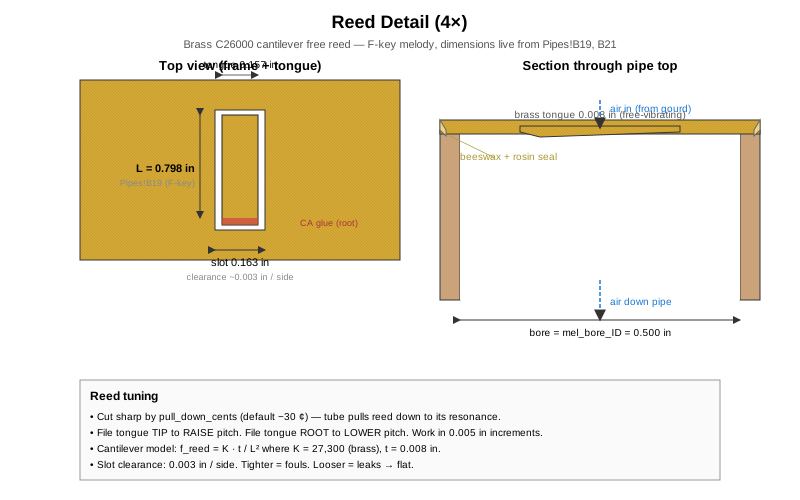
f_reed = K · t / L_tongue²
Brass C26000: K ≈ 27,300 imperial. Reed cut sharp by pull_down_cents (default −30 ¢) so the tube pulls it down to its resonance.
Finger holes (melody pipe)
d_hole = L_acoustic · (f_fund / f_hole)
Each opened hole shortens the effective length. Default Western diatonic offsets {2, 4, 5, 7, 9, 11, 12} semitones from tonic.
Family
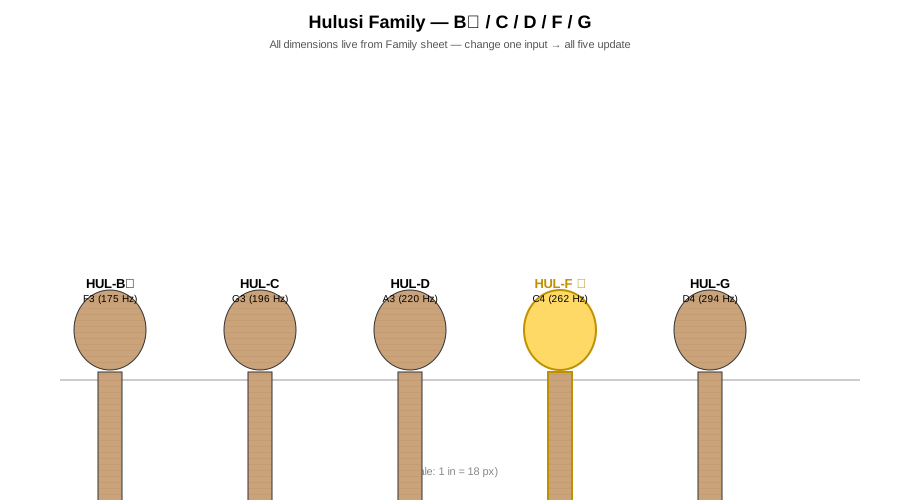
Five keys driven by a single key_midi input. Every dimension below is a formula in the Family sheet — change one input, all rows update.
| Model | Key | Tonic | Mel L | Dr1 L | Dr2 L | Reed L mel | Drawing | Use |
|---|---|---|---|---|---|---|---|---|
| HUL-B♭ | B♭ | F3 (175 Hz) | 14.89 in | 10.05 in | 7.62 in | 0.977 in | SVG | Low / warm |
| HUL-C | C | G3 (196 Hz) | 13.30 in | 8.99 in | 6.82 in | 0.922 in | SVG | Vocal range |
| HUL-D | D | A3 (220 Hz) | 11.89 in | 8.05 in | 6.12 in | 0.871 in | SVG | Folk / dance |
| HUL-F ★ | F | C4 (262 Hz) | 10.05 in | 6.82 in | 5.20 in | 0.798 in | SVG | Standard — prototype 1 |
| HUL-G | G | D4 (294 Hz) | 8.99 in | 6.12 in | 4.67 in | 0.753 in | SVG | Bright / festive |
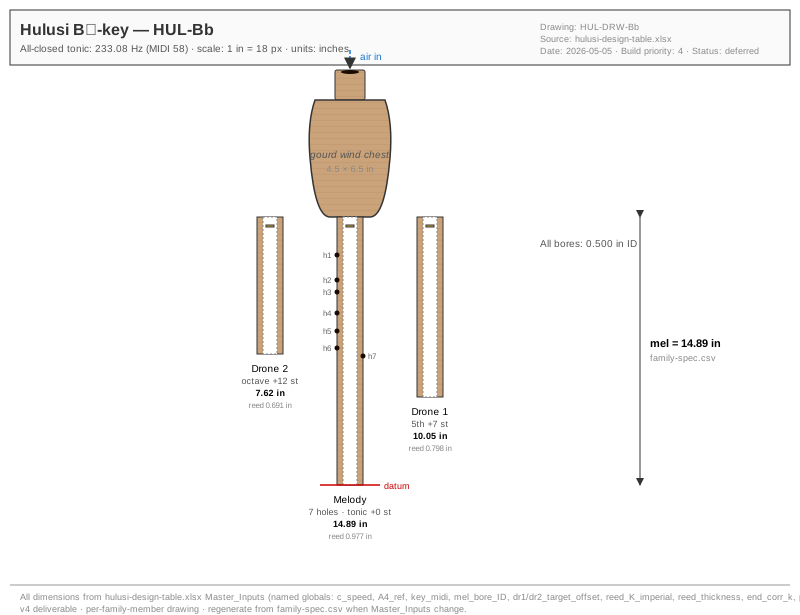
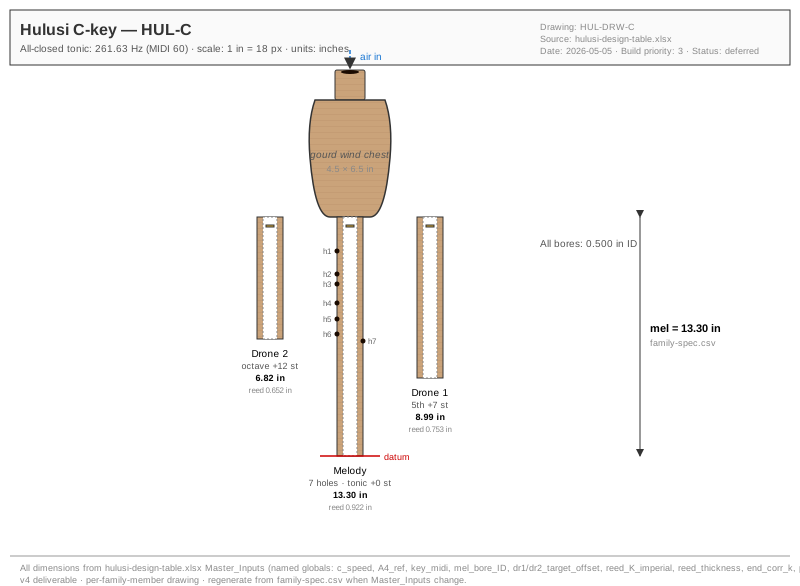
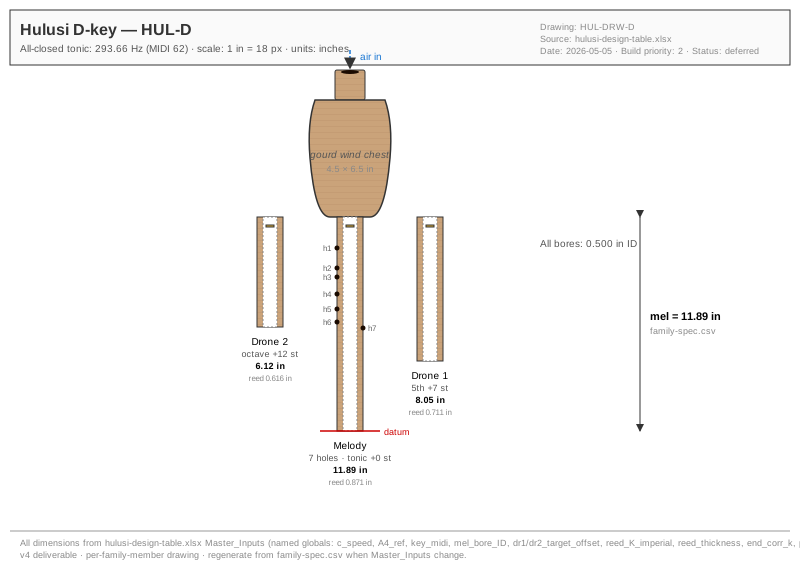
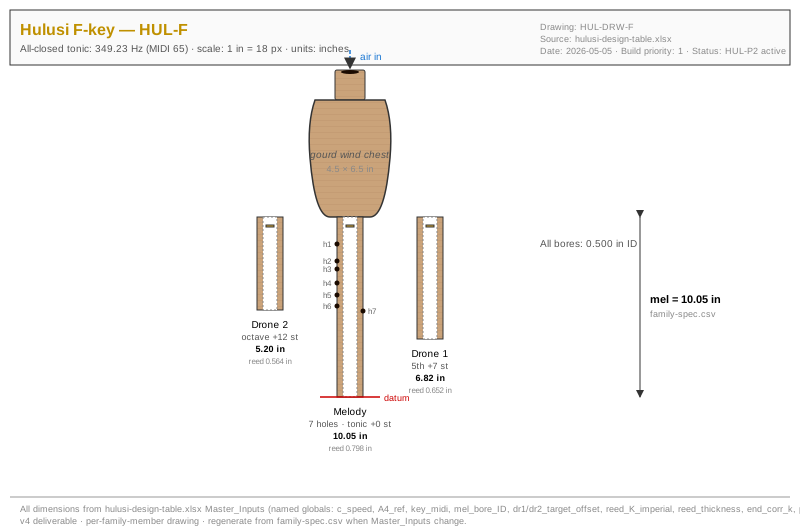
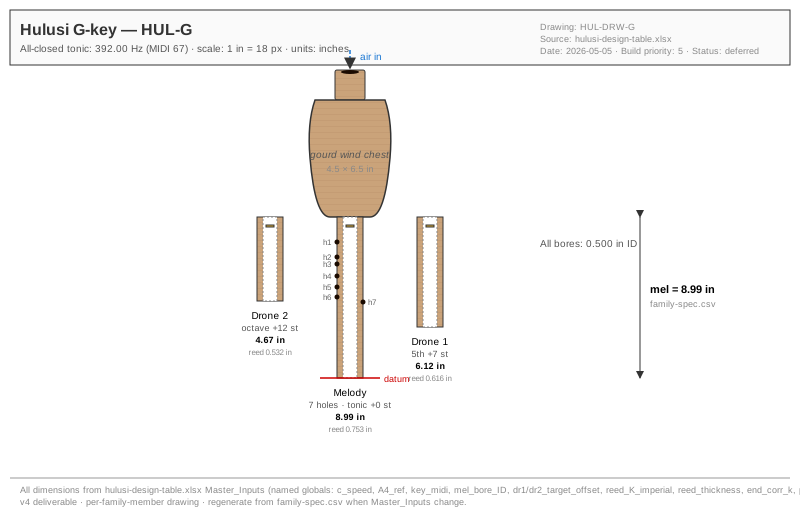
Drawings
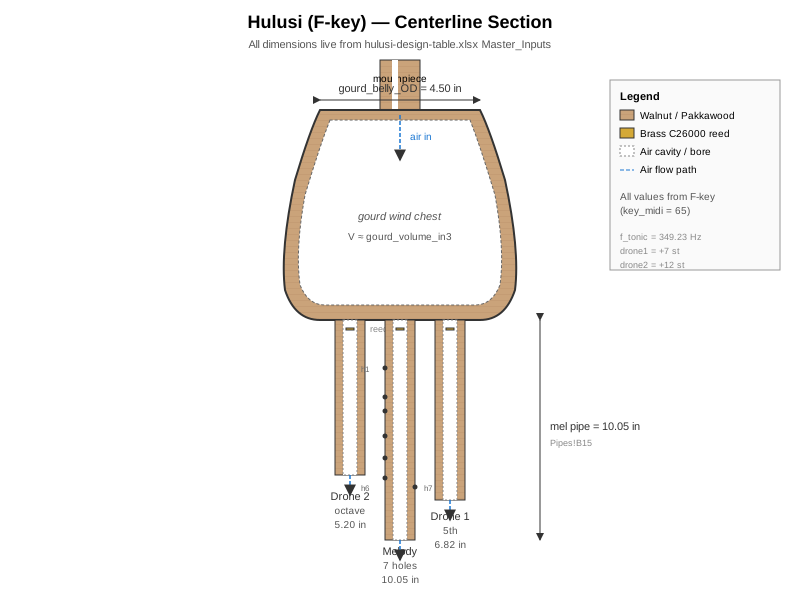
Prototype ladder
- HUL-P0 reed coupon — validate brass-shim cutting + slot fit.
- HUL-P1 single melody pipe (F-key) — validate stopped-pipe + finger-hole layout.
- HUL-P2 full F-key hulusi — hit family target with gourd + 3 pipes.
- HUL-P3 waxable Drone 2 — implement removable-wax drone control.
- HUL-P4 family molds/jigs — scale to B♭ / C / D / G.
Bill of materials (one F-key build)
Full BOM with supplier candidates and substitution rules: bom.csv · sourcing.csv · supplier-rfq.md
- Walnut gourd blank (~$20)
- 3 × pakkawood tube blanks (~$25)
- Brass shim 0.008 in × 1 sheet (~$20)
- Brass plate 0.040 in × 1 sheet (~$15)
- Beeswax + pine rosin (~$15)
- Boxwood mouthpiece blank (~$5)
- Reed file set (one-time ~$20)
- Total per build: ~$80–100 (excluding reusable tooling)
Open risks
Full red-team output: risks.md — 18 tracked risks across 5 categories, each with a verification test.
A1 — Reed pull-down assumption
Test: HUL-P0 measured pull-down vs. predicted −30 ¢ default.
S3 — Gourd glue-line failure
Test: Pressure-vacuum test at 30 / 60 / 90 days post-build.
S1 — Pakkawood split during boring
Test: 3 consecutive bores complete with no splits.
E1 — Hole positions vs hand size
Test: 3 players (large/avg/small hand) play scale without strain.
Next steps
- Cut HUL-P0 reed coupons on the Epilog laser; validate brass cutting + reed-frame fit.
- Sound 3 reeds off-pipe; fit
pull_down_centsandreed_K_imperial. - Build HUL-P1 melody pipe (F-key); validate stopped-pipe model + 7 hole positions.
- Build HUL-P2 full F-key hulusi; verify family target.
- Photo replace the concept renders with shop photos per the photo-shotlist.
- Scale to family per family-spec.csv.
Cultural note
The hulusi (葫芦丝, húlúsī, "gourd silk") belongs to the Dai people of Yunnan, with related cousin instruments across the Lahu, Wa, Achang, and De'ang peoples and across the border into northern Thailand and Laos. The traditional instrument uses a real dried bottle gourd and bamboo pipes. This project uses lathe-turned hardwood and pakkawood for build repeatability and bench durability — the lineage and naming remain credited.